
Injectable L-Carnitine: The Fat-Burning Amino Acid for Energy and Metabolism
Injectable L-Carnitine has become one of the most popular compounds in metabolic optimization and body composition research. By delivering this essential nutrient directly into the bloodstream, injectable L-Carnitine bypasses the significant absorption limitations of oral supplements – offering near-complete bioavailability for those looking to maximize fat metabolism, energy production, and exercise performance.
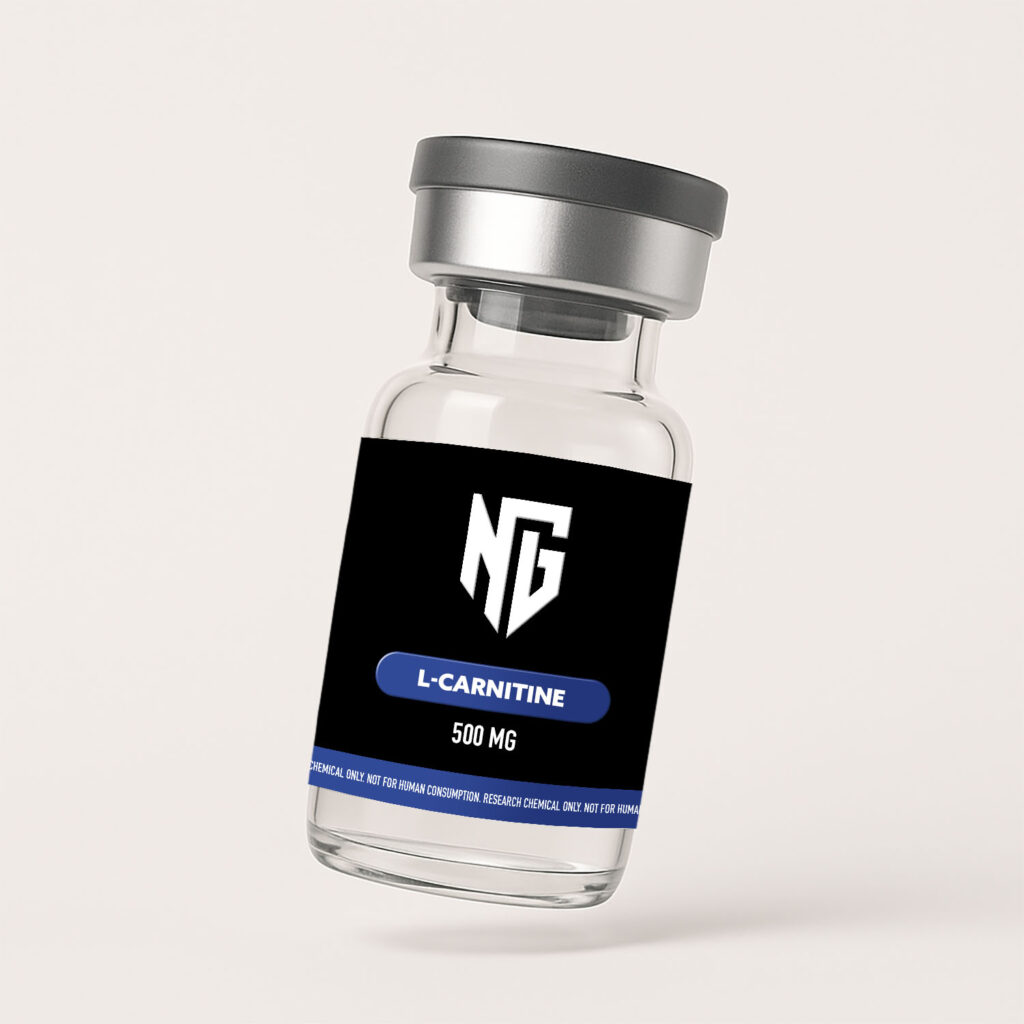
What Is L-Carnitine?
L-Carnitine (also known as levocarnitine or L-β-hydroxy-γ-N-trimethylaminobutyric acid) is a naturally occurring amino acid derivative synthesized in the liver and kidneys from the amino acids lysine and methionine. It can also be obtained from dietary sources, particularly red meat and dairy products.
L-Carnitine’s primary role is transporting long-chain fatty acids into the mitochondria – the energy-producing powerhouses of your cells – where they undergo beta-oxidation to produce ATP (cellular energy).
Without adequate carnitine, your body cannot efficiently burn stored fat for fuel. This makes L-Carnitine essential for:
- Fat metabolism
- Energy production
- Exercise performance
- Muscle recovery
- Cardiovascular health
How L-Carnitine Works: The Carnitine Shuttle
The “carnitine shuttle” is a sophisticated transport system that moves fatty acids across the inner mitochondrial membrane. Here’s how it works:
Step 1: Fatty Acid Activation
Long-chain fatty acids enter cells via fatty acid transport proteins (FATP, CD36). Inside the cytoplasm, they’re activated by acyl-CoA synthase to form fatty acyl-CoA.
Step 2: CPT-1 (Outer Membrane)
Carnitine palmitoyltransferase-1 (CPT-1) is the rate-limiting enzyme in fatty acid oxidation. Located on the outer mitochondrial membrane, CPT-1:
- Transfers the acyl group from fatty acyl-CoA to L-carnitine
- Forms acylcarnitine (fatty acid + carnitine)
- This is the critical step that requires carnitine availability
There are three CPT-1 isoforms:
- CPT-1A – Liver, kidney, brain
- CPT-1B – Skeletal muscle, heart (30-100x more sensitive to regulation)
- CPT-1C – Neurons
Step 3: CACT (Inner Membrane)
Carnitine-acylcarnitine translocase (CACT) shuttles acylcarnitines across the inner mitochondrial membrane while simultaneously exporting free carnitine back to the cytoplasm.
Step 4: CPT-2 (Matrix Side)
Carnitine palmitoyltransferase-2 (CPT-2) on the inner membrane converts acylcarnitines back to fatty acyl-CoA, releasing free carnitine for recycling.
Step 5: Beta-Oxidation
Once inside the mitochondrial matrix, fatty acyl-CoA enters the β-oxidation pathway, producing:
- Acetyl-CoA – enters the Krebs cycle for ATP production
- NADH and FADH2 – donate electrons to the electron transport chain
Each cycle of beta-oxidation shortens the fatty acid by 2 carbons, generating substantial ATP. For example, one molecule of palmitate (16-carbon fatty acid) yields approximately 106 ATP molecules.
Why Injectable L-Carnitine?
The Oral Bioavailability Problem
One of the biggest challenges with L-Carnitine supplementation is poor oral absorption:
| Administration Route | Bioavailability |
|---|---|
| Dietary L-Carnitine | 54-75% |
| Oral Supplement (2g) | ~16% |
| Oral Supplement (6g) | ~5% |
| Intravenous/Injectable | ~100% |
Research shows that oral carnitine absorption is already saturated at 2g doses – meaning taking more doesn’t increase blood levels proportionally.
Factors Limiting Oral Absorption
- Transport kinetics – OCTN2 transporters have limited capacity
- Intestinal metabolism – Gut bacteria convert carnitine to TMAO before absorption
- First-pass effect – Significant metabolism before reaching systemic circulation
Injectable Advantages
Injectable L-Carnitine delivers the compound directly into the bloodstream, offering:
- 100% bioavailability – No absorption losses
- Bypasses gut bacteria – Avoids TMAO conversion
- More predictable dosing – Consistent plasma levels
- Faster onset – Immediate availability to tissues
- Lower doses required – Half the dose achieves higher plasma concentrations than oral
A pharmacokinetic study found that switching from oral to IV L-carnitine maintained significantly higher plasma levels despite using approximately half the dosage.
What the Research Shows
Weight Loss and Body Composition
A 2020 meta-analysis of 37 randomized controlled trials found L-Carnitine supplementation provides a modest reducing effect on:
- Body weight
- BMI
- Fat mass
Effects were most pronounced in adults with overweight/obesity.
The mechanisms include:
- Enhanced fatty acid oxidation – More fat used for energy
- Improved insulin sensitivity – Better glucose utilization
- Reduced appetite – Direct effects on hypothalamus
- Decreased fat accumulation – Supports lipolysis
Exercise Performance and Recovery
A 2021 systematic review and meta-analysis found L-Carnitine improves:
- Body strength
- Sports endurance
- Exercise capacity
- Delayed fatigue onset
Key findings include:
- Increased VO₂ max in trained athletes
- Reduced blood lactate during exercise
- Decreased muscle soreness post-workout
- Faster recovery between training sessions
- Enhanced oxygen delivery to muscle tissue
L-Carnitine reduces the buildup of metabolic waste products like lactic acid, contributing to less post-exercise burnout.
Cardiovascular Health
A 2024 review found L-Carnitine may support heart health by:
- Strengthening heart muscle contraction
- Improving pumping efficiency
- Reducing diastolic blood pressure (especially in overweight individuals)
- Decreasing LDL cholesterol while increasing HDL
- Supporting fatty acid metabolism in cardiac tissue
The heart relies heavily on fatty acid oxidation for energy, making adequate carnitine levels essential for cardiovascular function.
Metabolic Flexibility
L-Carnitine plays a critical role in metabolic flexibility – the ability to switch between fuel sources:
- When carbohydrates are abundant: CPT-1 is inhibited by malonyl-CoA, directing fuel toward glucose oxidation
- During fasting/exercise: Malonyl-CoA drops, CPT-1 activates, fat oxidation increases
Carnitine also:
- Regulates acetyl-CoA/CoA ratios
- Supports pyruvate dehydrogenase flux
- Facilitates ketogenesis during fasting
- Protects against fatty acid accumulation
Injectable L-Carnitine vs. Oral Forms
| Factor | Injectable | Oral |
|---|---|---|
| Bioavailability | ~100% | 5-18% (supplements) |
| Onset | Immediate | Hours |
| TMAO Production | None | Significant |
| Consistency | Highly predictable | Variable |
| Gut Issues | Bypassed | Can affect absorption |
Research comparing oral to IV L-carnitine found that switching to IV administration improved lipid profiles more effectively, supporting the clinical utility of injectable delivery.
Timing Considerations
Many users administer L-Carnitine before exercise to maximize fat oxidation during training. The compound supports increased fat utilization when the body is primed for fatty acid metabolism.
Safety and Considerations
L-Carnitine is generally well-tolerated with a strong safety profile:
- Naturally occurring in the body
- Non-stimulant – No jitters or crashes
- No ban status – Legal in most sports organizations
- Long clinical history – Used medically for decades
Potential mild side effects (uncommon):
- Temporary warmth at injection site
- Mild nausea
- Transient body odor
Contraindications:
- Thyroid disorders (consult physician)
- Seizure disorders (high doses may lower seizure threshold)
- Pregnancy/breastfeeding (consult physician)
Supporting L-Carnitine Levels Naturally
While injectable L-Carnitine offers superior bioavailability, dietary sources can support baseline levels:
| Food | L-Carnitine Content (per 100g) |
|---|---|
| Beef steak | 56-162mg |
| Ground beef | 87-99mg |
| Pork | 24-28mg |
| Chicken | 3-5mg |
| Milk | 3-4mg |
Vegetarians and vegans typically have lower plasma carnitine levels, as plant foods contain minimal amounts.
The Bottom Line on Injectable L-Carnitine
Injectable L-Carnitine addresses the fundamental limitation of oral supplementation – poor bioavailability. By delivering this essential fatty acid transporter directly into the bloodstream, injectable L-Carnitine offers a more efficient pathway to support fat metabolism, energy production, and exercise performance. For those looking to optimize body composition and metabolic health, injectable L-Carnitine provides a research-backed approach to maximizing the benefits of this critical nutrient.
Disclaimer: This article is for educational purposes only. NexGen Peptides products are intended for laboratory research use only. Not for human consumption.
References:
- Longo N, et al. Carnitine transport and fatty acid oxidation. Biochim Biophys Acta. 2016.
- Fielding R, et al. L-Carnitine Supplementation in Recovery after Exercise. Nutrients. 2018.
- Sanchez-Niño MD, Ortiz A. Differential effects of oral and intravenous l-carnitine on serum lipids. Clin Kidney J. 2014.